
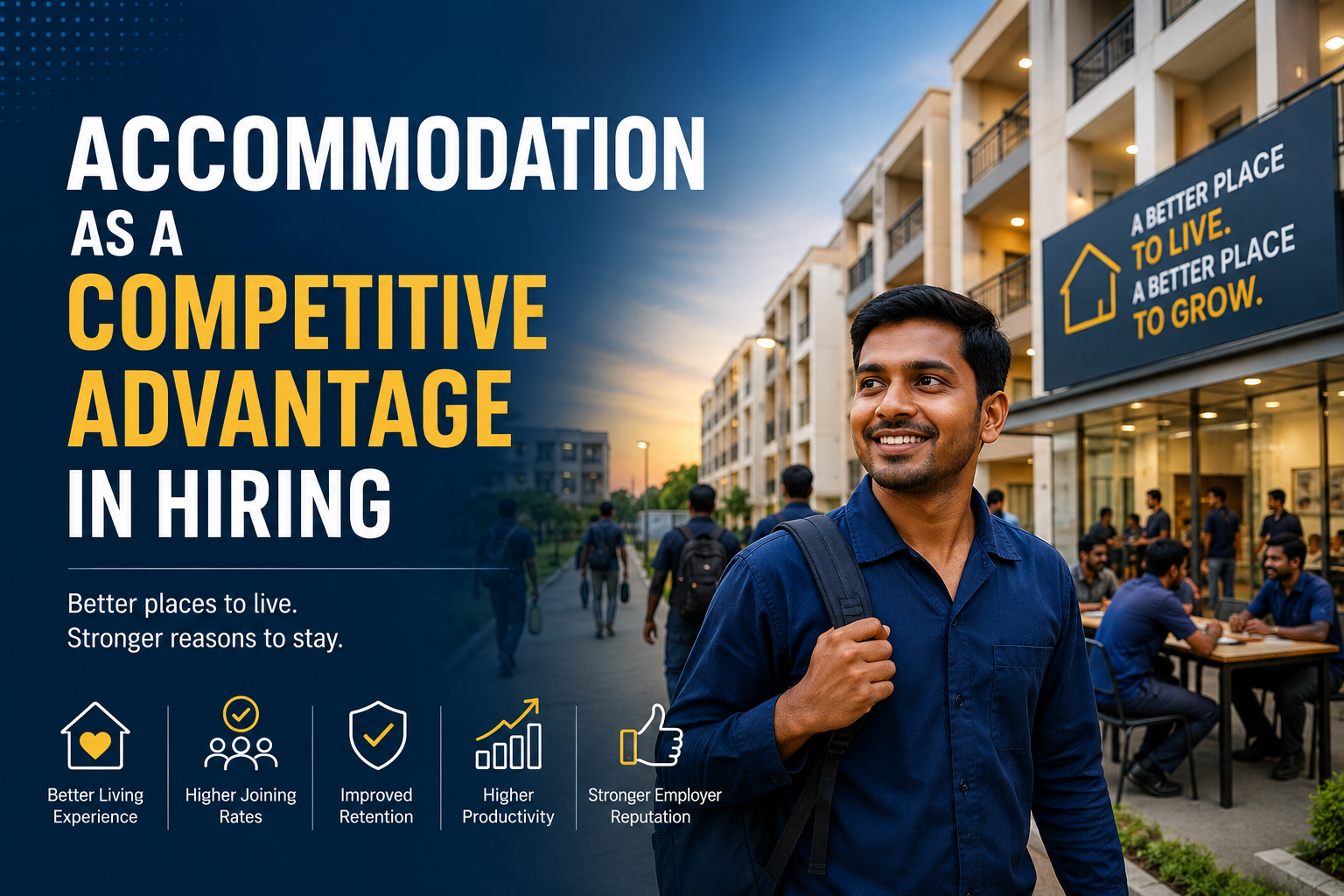
For years, companies competing for blue-collar talent focused on one thing: wages.
But today, that's changing.
Across industries like logistics, manufacturing, construction, and facility management, companies are discovering that workers are evaluating more than just salary.
They are asking:
- Where will I stay?
- How far is the accommodation?
- Is the food good?
- Is the place safe and clean?
In many cases, accommodation has become a deciding factor in whether a worker joins — or stays. And that is turning worker housing into an unexpected but powerful advantage in hiring.
The New Reality of Blue-Collar Hiring
India's blue-collar workforce is highly mobile. Workers often move between cities, contractors, and employers.
And when salary differences between companies are small, workers compare something else: overall quality of life. That includes:
- Accommodation quality
- Food
- Travel distance
- Hygiene
- Safety
- Stability
Companies ignoring these factors are increasingly struggling with high drop-offs after joining, frequent attrition, and lower workforce reliability.
Why Accommodation Matters More Than Companies Realize
For many migrant workers, accommodation is not just a benefit. It is their home, resting space, social environment, and recovery system after long shifts.
A poor living environment creates physical fatigue, mental stress, poor sleep, and reduced morale. Over time, this directly impacts attendance, productivity, and retention.
Workers may tolerate difficult jobs — but they rarely tolerate poor living conditions for long.
The Hiring Advantage of Better Accommodation
Companies offering structured accommodation are beginning to see clear hiring advantages.
1. Faster Recruitment
Workers are more likely to join when housing is already arranged, facilities are organized, and the transition to a new city feels easier. This reduces onboarding friction significantly.
2. Better Retention
Workers staying in clean, managed environments are more likely to stay longer, bring referrals from their network, and build stability around the job. Accommodation directly influences loyalty.
3. Stronger Employer Reputation
Among blue-collar communities, word spreads fast. Workers talk about food quality, room conditions, and treatment by management. Companies known for good living conditions become preferred employers.
4. Reduced Dependence on Constant Hiring
Lower attrition means less rehiring, lower training costs, and a more experienced workforce. This creates operational stability that competitors struggle to match.
Accommodation is Becoming Part of Employer Branding
Traditionally, employer branding focused on white-collar talent. But today, even blue-collar hiring is becoming experience-driven.
Forward-thinking companies now showcase accommodation photos, dining facilities, hygiene standards, and worker welfare systems — because they understand that the worker experience starts before the first shift.
The Role of Organized Accommodation
The difference is not luxury. It's structure. Well-managed facilities provide:
- Clean rooms
- Reliable food
- Proper sanitation
- Security and supervision
- Grievance support systems
And increasingly, technology-driven operations: digital onboarding, occupancy tracking, and worker communication systems. This is exactly the kind of structured model Tikaana is building through its centralized accommodation management approach.
The Bigger Shift
The companies winning the talent battle are no longer asking, "How cheaply can we house workers?" They are asking, "How can accommodation improve hiring and workforce stability?"
That shift changes everything. Because once accommodation becomes part of workforce strategy — not just operations — it starts generating measurable business value.
Why This Matters for India
India's growth depends heavily on migrant and blue-collar workers. As demand for labor increases, competition for reliable workers will intensify and worker expectations will continue to rise.
Companies that invest early in worker infrastructure will gain better hiring outcomes, stronger retention, and more scalable operations.
Final Thought
In the future, companies won't compete only on salary. They'll compete on stability, living standards, and worker experience. And accommodation will sit at the center of that shift.
For blue-collar workers, a better place to live often means a better place to work.
Improve your workforce outcomes with Tikaana.
Talk to us about structured worker accommodation that pays for itself.
Talk to usMore from the blog
Site Adjacent Factory Employee Accommodation: Building the Foundation for India's Workforce Future
SAFE accommodation — professionally managed worker housing near factories and industrial hubs — is becoming critical infrastructure for India's manufacturing future.
AI and the Future of Blue-Collar Workers: From Labour to Empowerment
AI's biggest impact may not be in white-collar jobs — it could fundamentally transform how blue-collar workers live, work, learn, and grow.