
Site Adjacent Factory Employee Accommodation: Building the Foundation for India's Workforce Future
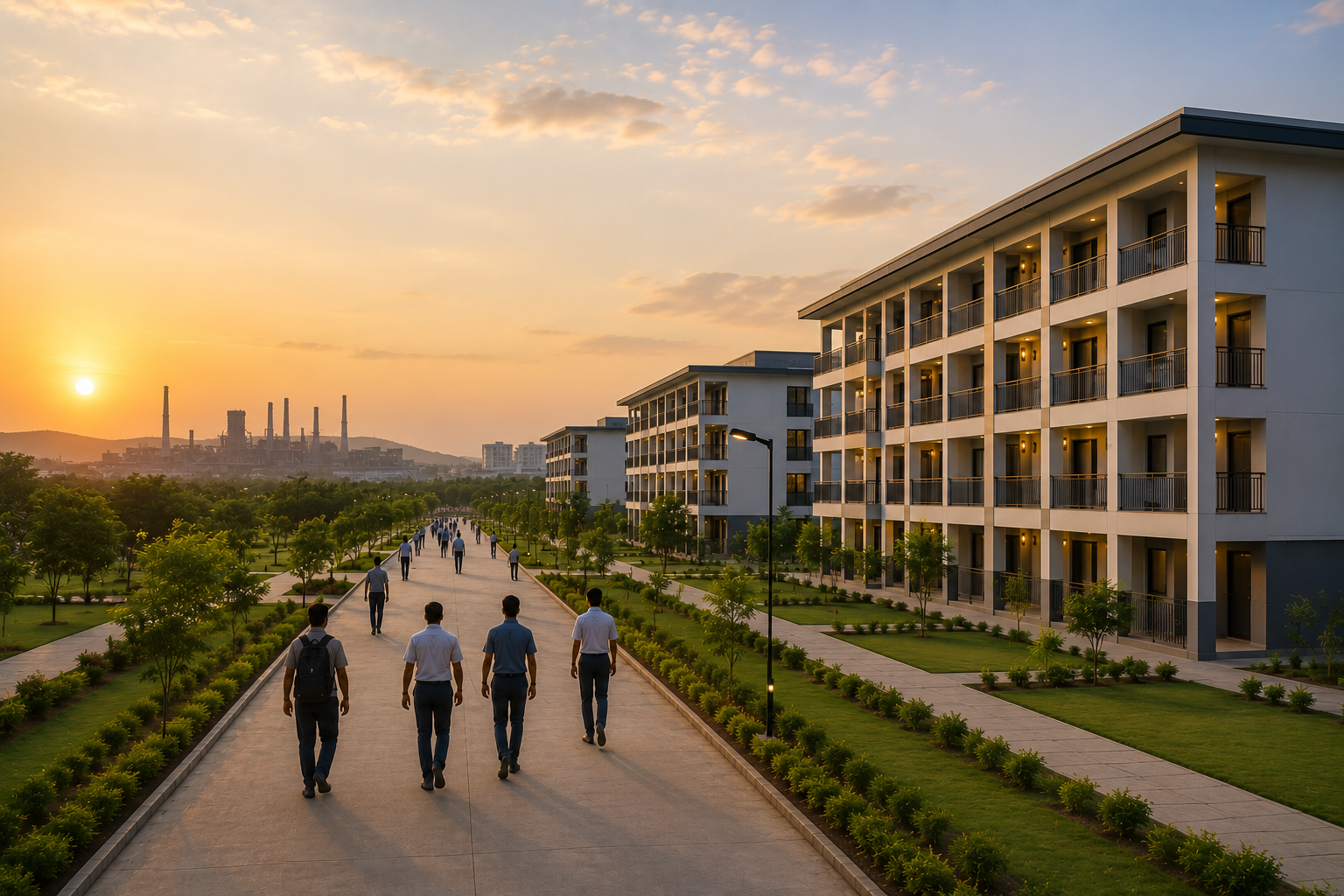
India is rapidly emerging as one of the world's most important manufacturing destinations.
From electronics and textiles to logistics, warehousing, retail, healthcare, and industrial infrastructure, companies across the country are scaling operations at an unprecedented pace.
But alongside factories, industrial corridors, and production facilities, another critical infrastructure need is becoming impossible to ignore:
Where will the workforce live?
This is where the concept of Site Adjacent Factory Employee (SAFE) Accommodation becomes extremely important.
SAFE accommodation refers to professionally managed worker housing located close to factories, warehouses, industrial parks, hospitals, and large employment hubs. The idea is simple but powerful:
Workers should not have to travel long distances or live in unsafe, overcrowded, and unorganized conditions just to support industrial growth.
SAFE accommodation aims to create safe, hygienic, accessible, and dignified living environments for the workforce while improving operational efficiency for employers and supporting broader economic development.
What SAFE Accommodation Means for the Worker
For workers, accommodation is not merely a place to sleep.
It directly affects:
- physical health
- mental wellbeing
- safety
- financial stability
- productivity
- quality of life
When accommodation is located close to the workplace, workers benefit in several ways.
Reduced Travel Stress
Long daily commutes often lead to fatigue, absenteeism, and reduced productivity. Site-adjacent accommodation significantly reduces commute times, allowing workers to save both time and energy.
Improved Safety
Workers, especially women employees, benefit from safer environments with secure facilities, better lighting, organized transport, and reduced late-night travel risks.
Better Living Conditions
SAFE accommodation focuses on:
- clean rooms
- proper sanitation
- hygienic food
- drinking water
- organized facility management
- maintenance support
This creates healthier and more stable living environments.
Greater Dignity
Workers who contribute to India's economic growth deserve organized and respectful living conditions. SAFE accommodation recognizes workforce housing as an essential part of human dignity rather than an afterthought.
What SAFE Accommodation Means for the Employer
For employers, workforce accommodation is increasingly becoming a strategic business decision rather than just an operational necessity.
Improved Worker Retention
In many industries, poor accommodation contributes directly to high attrition rates. Better living conditions can significantly improve workforce stability and employee satisfaction.
Higher Productivity
Workers who live closer to the workplace are often:
- more punctual
- less fatigued
- more productive
- less likely to miss shifts
Reduced travel time directly impacts operational efficiency.
Faster Hiring
Companies offering organized accommodation become more attractive to workers, particularly migrant labor populations moving across states for employment opportunities.
Reduced Operational Disruptions
Stable accommodation systems help companies better manage:
- attendance
- transportation
- workforce planning
- shift scheduling
- emergency response
Stronger Employer Brand
As worker wellbeing gains importance, companies investing in SAFE accommodation demonstrate responsibility, professionalism, and long-term commitment to their workforce.
What SAFE Accommodation Means for Society
The impact of workforce housing extends far beyond factories and industrial parks.
SAFE accommodation can help address several larger social and urban challenges.
Reduction in Informal Settlements
Many industrial regions experience the growth of overcrowded and poorly managed informal worker settlements due to lack of organized housing infrastructure.
SAFE accommodation provides structured alternatives that improve overall urban living conditions.
Improved Public Health
Organized housing with proper sanitation, hygiene, waste management, and food systems can significantly reduce health risks and improve community wellbeing.
Safer Communities
Managed accommodations with proper oversight, security systems, and support services contribute to safer and more organized communities.
Greater Social Stability
Stable housing improves workers' quality of life, financial stability, and long-term integration into local economies.
What SAFE Accommodation Means for the Government
India's manufacturing ambitions require more than factories alone.
Sustainable industrial growth depends on workforce infrastructure.
SAFE accommodation supports several national priorities.
Supporting Manufacturing Growth
As India expands industrial corridors and manufacturing clusters, professionally managed worker housing becomes essential to sustaining labor availability and industrial productivity.
Increasing Workforce Participation
Safe and organized accommodation can particularly help improve participation among:
- women workers
- migrant workers
- first-time industrial employees
Reducing Urban Infrastructure Pressure
Planned workforce housing can reduce pressure on unorganized urban settlements and improve city planning outcomes around industrial zones.
Enabling Economic Development
Stable workforce ecosystems strengthen:
- manufacturing competitiveness
- industrial scalability
- employment generation
- regional economic development
Advancing Worker Welfare
SAFE accommodation aligns with broader goals around:
- worker dignity
- health
- safety
- inclusion
- social infrastructure
Workforce Housing is the Next Industrial Infrastructure
For decades, industrial growth discussions focused primarily on:
- factories
- machinery
- logistics
- roads
- ports
But the future of industrial development will also depend heavily on workforce living infrastructure.
As India continues its manufacturing expansion, Site Adjacent Factory Employee accommodation will become increasingly important for:
- operational efficiency
- worker wellbeing
- social stability
- sustainable industrial growth
The companies, policymakers, and infrastructure providers that recognize this early will help shape a stronger and more inclusive industrial future for India.
At Tikaana, we believe workforce accommodation is not just housing — it is critical infrastructure that powers India's growth.
Improve your workforce outcomes with Tikaana.
Talk to us about structured worker accommodation that pays for itself.
Talk to usMore from the blog
AI and the Future of Blue-Collar Workers: From Labour to Empowerment
AI's biggest impact may not be in white-collar jobs — it could fundamentally transform how blue-collar workers live, work, learn, and grow.
Accommodation as a Competitive Advantage in Hiring
Wages alone no longer win blue-collar talent. Accommodation is becoming a deciding factor in whether workers join — and stay.