
For years, worker accommodation has been managed largely through manual processes — paper registers, phone calls, spreadsheets, and on-ground supervisors handling everything from bed allocation to complaints.
But as industries scale and workforce mobility increases, traditional systems are no longer enough.
Today, technology is transforming worker housing from a fragmented operational challenge into a structured, efficient, and scalable ecosystem.
For companies managing hundreds or thousands of blue-collar workers, technology is becoming essential — not optional.
Why Traditional Worker Housing Management Fails
Managing worker accommodation at scale is far more complex than most people realize. A single facility may involve:
- Hundreds of residents
- Multiple shifts
- Frequent worker movement
- Food operations
- Transportation coordination
- Maintenance requests
- Safety and compliance tracking
- Visitor management
- Utility monitoring
When these operations are handled manually, problems quickly emerge:
- Incorrect occupancy data
- Unauthorized residents
- Poor maintenance tracking
- Food wastage
- Security risks
- Compliance gaps
- Slow issue resolution
The result is operational inefficiency, higher costs, and poor worker experience.
Technology Brings Visibility
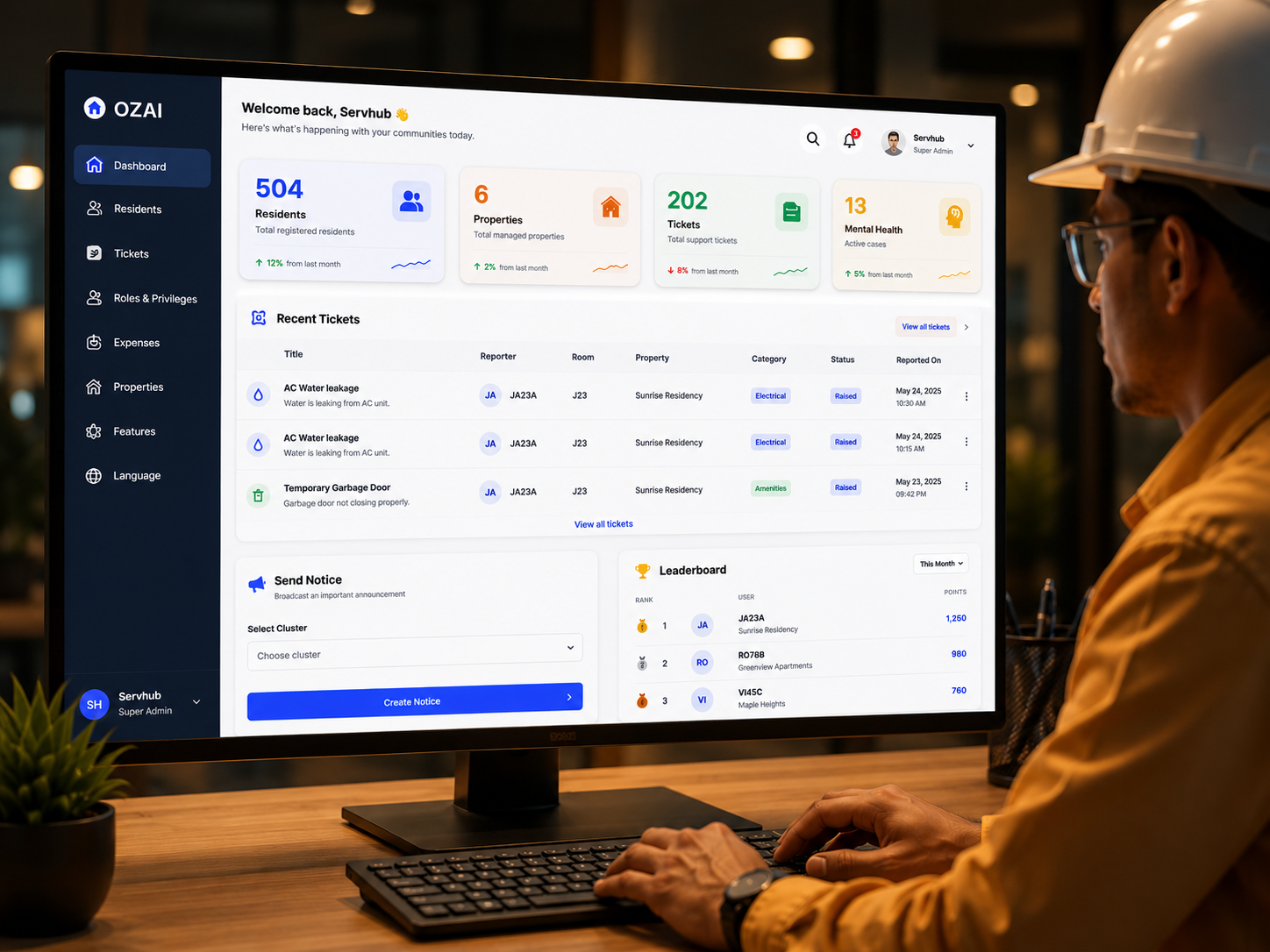
One of the biggest advantages of technology is real-time visibility. Modern worker housing platforms can provide centralized dashboards showing:
- Occupancy levels
- Vacant beds
- Resident movement
- Attendance records
- Visitor logs
- Maintenance requests
- Incident reports
- Utility consumption
Instead of relying on multiple supervisors and disconnected spreadsheets, companies can monitor facilities from a single system. This becomes especially valuable for organizations operating across multiple cities and labor camps.
Digital Bed and Resident Management
In many worker accommodations, even simple processes like bed allocation can become chaotic. Technology simplifies this through:
- Digital resident onboarding
- ID verification
- Automated bed assignment
- Shift-based room allocation
- Vacancy tracking
- Transfer management
With proper digital systems, operators can instantly know who is staying where, which beds are vacant, which workers recently checked in or out, and which facilities are nearing capacity. This improves operational efficiency while reducing misuse and overcrowding.
Improving Safety and Security
Safety is a major concern in large worker accommodations. Technology-enabled systems now support:
- Biometric access
- QR-based entry
- CCTV integration
- Visitor tracking
- Emergency alerts
- Digital incident reporting
These systems improve accountability and help operators respond faster during emergencies. For employers, this also strengthens compliance and reduces operational risk.
Better Worker Experience
Technology is not only about efficiency — it also improves the daily lives of workers. Mobile-based systems can help residents:
- Raise complaints
- Request maintenance
- Access food schedules
- View transportation timings
- Receive important announcements
- Connect with support staff
This creates a more organized and dignified living experience. When workers feel heard and supported, companies often see improvements in retention, productivity, attendance, and overall morale.
Data Will Drive Smarter Decisions
One of the most powerful benefits of technology is data. Over time, accommodation platforms can generate valuable insights such as:
- Occupancy trends
- Attrition patterns
- Peak migration periods
- Food consumption behavior
- Utility usage
- Maintenance frequency
- Transportation demand
These insights help companies optimize operations, reduce costs, and plan future infrastructure more effectively. In the future, workforce accommodation decisions may become as data-driven as supply chain or logistics planning.
ESG and Compliance Monitoring
As companies face increasing pressure around ESG and labor welfare standards, technology can play a critical role in compliance management. Digital systems help maintain:
- Resident records
- Safety audits
- Health logs
- Facility inspections
- Hygiene monitoring
- Compliance documentation
This creates transparency and audit readiness for large employers and global clients.
The Future of Worker Housing
Worker accommodation is evolving beyond just providing beds. The future will likely include:
- Smart accommodation campuses
- AI-driven operations
- Predictive maintenance
- Automated energy management
- Integrated healthcare support
- Workforce analytics dashboards
- Digitally connected labor ecosystems
The companies that adopt technology early will be better positioned to scale efficiently and deliver higher-quality living environments.
Conclusion
Technology is redefining how worker housing is managed. What was once a manual, fragmented, and reactive process is becoming data-driven, organized, and scalable.
For employers, this means better operational control and improved workforce stability. For workers, it means safer, cleaner, and more dignified living conditions.
Technology is laying the foundation for a more formal and professional worker accommodation ecosystem.
Improve your workforce outcomes with Tikaana.
Talk to us about structured worker accommodation that pays for itself.
Talk to usMore from the blog
Site Adjacent Factory Employee Accommodation: Building the Foundation for India's Workforce Future
SAFE accommodation — professionally managed worker housing near factories and industrial hubs — is becoming critical infrastructure for India's manufacturing future.
AI and the Future of Blue-Collar Workers: From Labour to Empowerment
AI's biggest impact may not be in white-collar jobs — it could fundamentally transform how blue-collar workers live, work, learn, and grow.